This article is part of an ongoing series exploring the history of the Warren Township School District. Each installment examines a distinct era in the district's development.
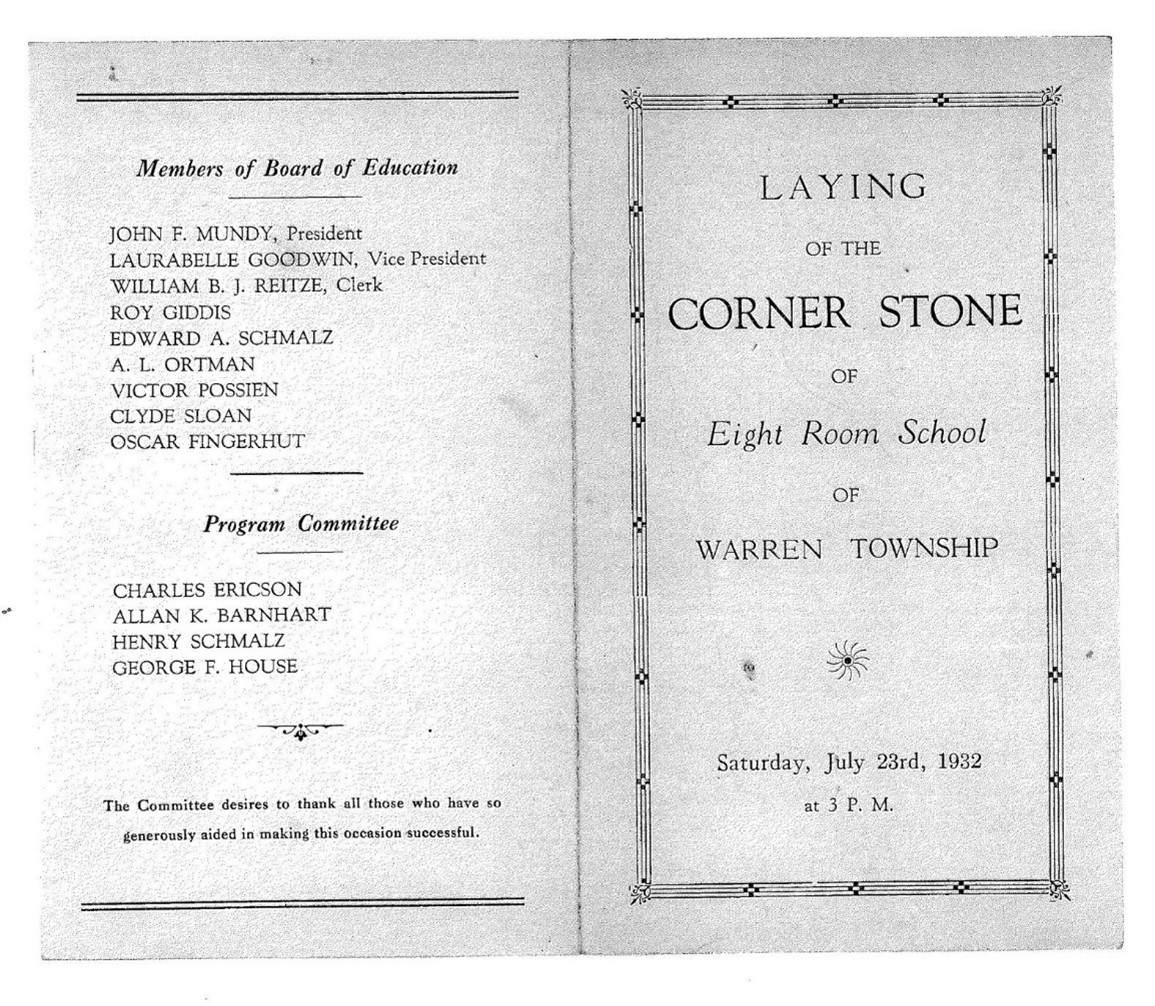
By the early 1930s, Warren Township's school system stood at a crossroads. A network of small, neighborhood schoolhouses - once practical for a rural township - was increasingly strained by enrollment growth, aging facilities, and rising state expectations. The question was not whether education mattered, but whether Warren was prepared to fundamentally change how it delivered schooling.
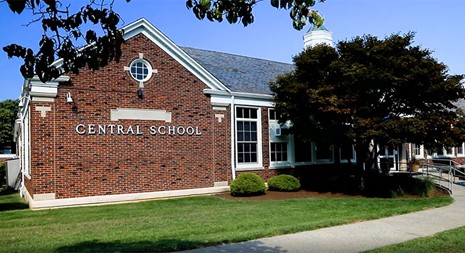
The years that followed brought contentious meetings, repeated referenda, and disagreements over cost, location, and control. Central School's creation in 1933 was not the result of quick consensus, but prolonged debate during one of the most difficult economic periods in American history - a fight that shaped not only where children learned, but how the township understood itself.
A Township Under Strain
By the early 1930s, Warren operated six separate schoolhouses across its hamlets. Most were one-room buildings designed for far smaller enrollments. Teachers managed multiple grades in a single classroom, and none of the schools had on-site principals. While deeply rooted in their neighborhoods, they were increasingly overcrowded and ill-suited for modern instructional demands.
Population growth during the 1920s pushed enrollment beyond what these facilities could reasonably support. Children in some sections walked long distances, and temporary arrangements - renting halls, redistributing grades, transporting older pupils to neighboring districts - were already in use. Board minutes from October 1930 record "congested conditions in the schools." By 1931, incremental fixes were no longer enough.
State Pressure
Local concern over overcrowding was soon matched by pressure from outside the township. County Superintendent Robert G. Sanford and state officials made clear that Warren's school conditions were drawing scrutiny, and that continued state aid depended on meaningful action. A formal survey of the township's six schools documented deficiencies in space, safety, and instructional suitability across multiple buildings.
For many residents, this external assessment intensified an already difficult debate. Questions of educational philosophy - neighborhood schools versus centralized instruction - became urgent questions of compliance, funding, and timing. The debate was no longer abstract.
Crisis Becomes Public
On January 24, 1931, residents gathered at Fairview Hall to confront what Board minutes called "congested conditions in the schools." A circular letter to "Citizens and Taxpayers" acknowledged that six one-room schools were no longer sufficient. Children from the eastern edge of the township were being transported to a school in the northwest. Additional buses would likely be required the following year.
At the meeting, Sanford made the stakes unmistakeable: if Warren expected to continue receiving state aid, "something must be done at once."
From that point forward, the issue ceased to be theoretical.
Four Votes and a Divided Township
What followed was not a swift consensus but sustained disagreement.
Three early referenda failed by wide margins - 83-273, 80-154, and 54-217 - sending the Board back to negotiations over land and cost.
Minutes record acre-by-acre bargaining with multiple landowners. Offers were made, withdrawn, and reconsidered. One donated parcel was formally withdrawn after voters rejected it, and committees recessed meetings to inspect property lines in person.
Meanwhile, organized opposition took shape.
Tax collector Edward A. Schult, Sr. publicly urged residents to "Vote NO," warning that school expenses were already exceeding voted appropriations. He declared the Board "in hock for $5,130 of useless expenses" and reminded taxpayers that unemployment relief and old-age pensions would soon increase local burdens. In the depths of the Great Depression, such warnings carried weight.
The debate was not simply about education. It was about taxes, fairness, geography, and identity. Some advocated adding rooms to existing schools. Others proposed building two four-room schools - one east, one west. Still others insisted only a single eight-room building would provide proper grade-level organization and long-term efficiency.
Then the State escalated the pressure.
In September 1931, the Board learned that approximately $10,400 in state aid had been withheld. The funds would be redistributed to other districts unless building contracts were signed within months. Emergency measures followed. The Grange Hall was rented for $450 to relieve crowding. Meetings were scheduled with state officials. Phone calls were made directly to Sanford for clarification.
The conversation shifted. It was no longer solely about preference. It was about losing state funding.
On November 5, 1931, voters rejected a proposed site by five votes: 274 yes, 279 no.
Another election was scheduled.
On December 10, 1931, the measure finally passed: 311 to 267.
The resolution authorized purchase of five acres along Plainfield Boulevard (now Mt. Horeb Road) and construction of an eight-room, fireproof schoolhouse not to exceed $75,000, financed through bond issuance.
Seven months. Four referenda. Site negotiations. Public campaigning on both sides.
The margin remained narrow. But the direction was settled.
Building in the Midst of Hardship
Approval did not bring smoothness.
Plans were submitted in early 1932 and contracts awarded in May. By March 1933, however, the electrical contractor had defaulted, requiring insurance intervention. When the building was occupied in April, the Board noted it was "in no way an acceptance" of the new school. Litigation followed, requiring a special election to transfer funds for settlement, which passed 44 to 2.
Consolidation also meant closure.
The one-room schoolhouses and their land were auctioned off one at a time or returned to rightful property owners per deed restrictions. Buildings that had anchored hamlets for generations changed hands.
What had once been six neighborhood schools became one township-wide institution.
A New Kind of School
When Central School was formally dedicated on Washington's Birthday in early 1934, snow limited attendance. Fewer than three hundred residents gathered in the new auditorium. But the tone had shifted from conflict to reflection.
Sanford praised the Board's "Stick To Itness" in bringing to conclusion "an aggressive fight for modern school facilities." The phrase captured what the minutes show clearly: this was not inevitability. It was persistence.
The keynote address went further. Public education, the speaker reminded the audience, was about more than the traditional "three R's." It was about developing "faith in one another" and properly training the next generation "to make a life." In the midst of economic depression, the township had chosen to invest not only in classrooms, but in civic formation.
Central School allowed students to be grouped by grade level. It provided a library, cafeteria, and auditorium. It became the site for community meetings, performances, and civic gatherings. It re-centered township life.
What Was Lost, What Was Gained
The consolidation of Warren's schools carried tradeoffs. Neighborhood intimacy gave way to a township-wide school community. Children traveled farther from home. Local landmarks disappeared from daily routine.
Yet the decision also established a pattern that would reappear throughout Warren's history: growth would produce strain; strain would produce public debate; debate would lead to close votes; and change would occur only after sustained deliberation.
The archival record shows not a smooth march toward modernization, but a community wrestling with cost, identity, and responsibility during the Great Depression.
In the end, Warren did not simply build a school.
It chose a direction.
Community members with questions, feedback, or additional historical information are invited to contact the district at community@warrentboe.org.
Next installment: Part III - Postwar Growth and the Expansion of Elementary Education (1946 - 1960)